Consumer warning

The Higgsfield Scam Question Creators Should Ask FirstWho Controls Your Work?

Before you upload client work, faces, prompts, references, edits, style frames, or finished outputs to Higgsfield, read the fine print. The backlash around Higgsfield’s terms was not just about pricing. It was about control: who can use your work, who can train on it, whether deletion actually protects you, and whether your output is ever truly exclusive.

For creators, IP is not paperwork. It is the business. If the platform gets broad rights and you get uncertainty, that is not creator-first. That is a warning sign.

Unlisted YouTube episodeHiggsfield TOS DramaThe full story, past and present.

Creator IP red flags

Read the upload rights before you trust the product.

The receipts below preserve the terms discussion that triggered the creator backlash. Policies change, so compare the screenshots against the current documents before you upload anything sensitive.

01

Did Higgsfield’s terms give the company too much control over user outputs?

The concern was that Higgsfield’s original terms granted a perpetual, irrevocable, transferable, sublicensable license to user uploads and generated outputs. That may not be “ownership” in the narrow legal sense, but it can still feel like control without real exclusivity.
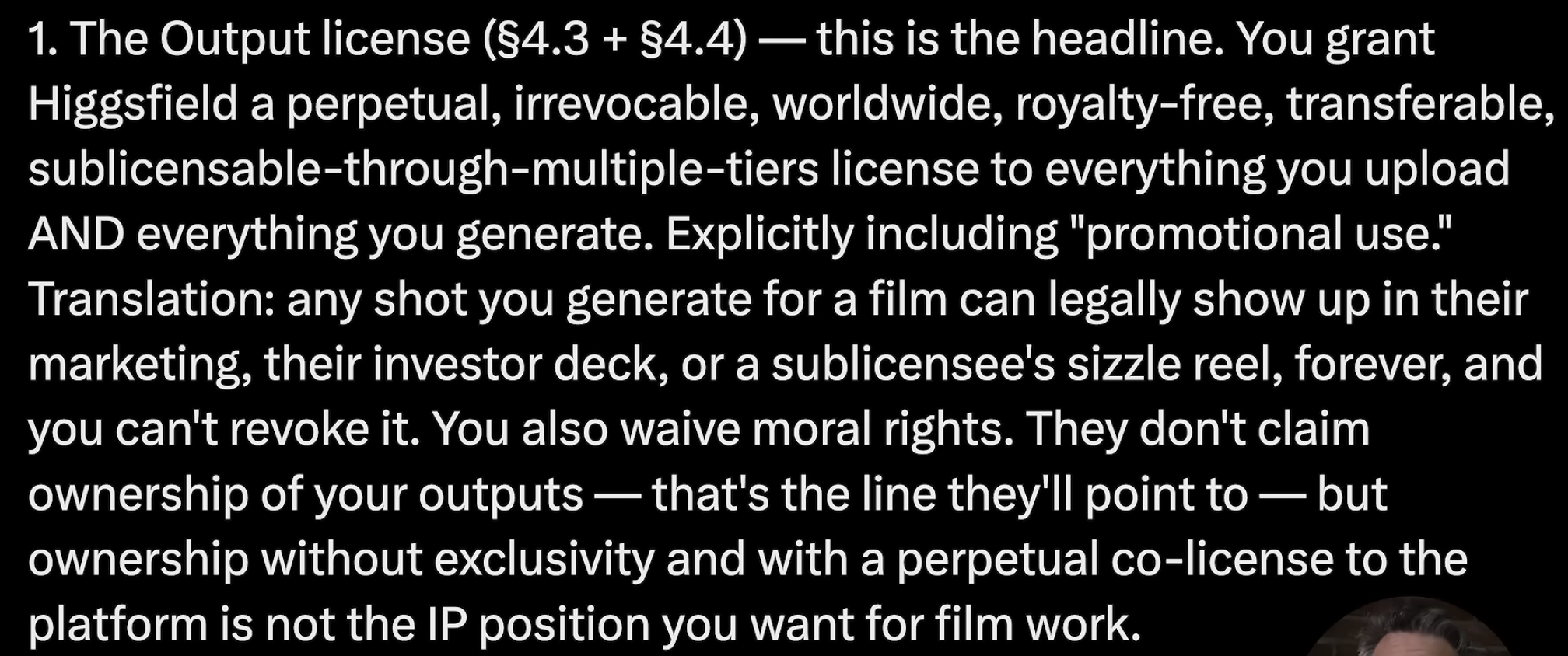
Screenshot of a critique discussing output-license language.
02

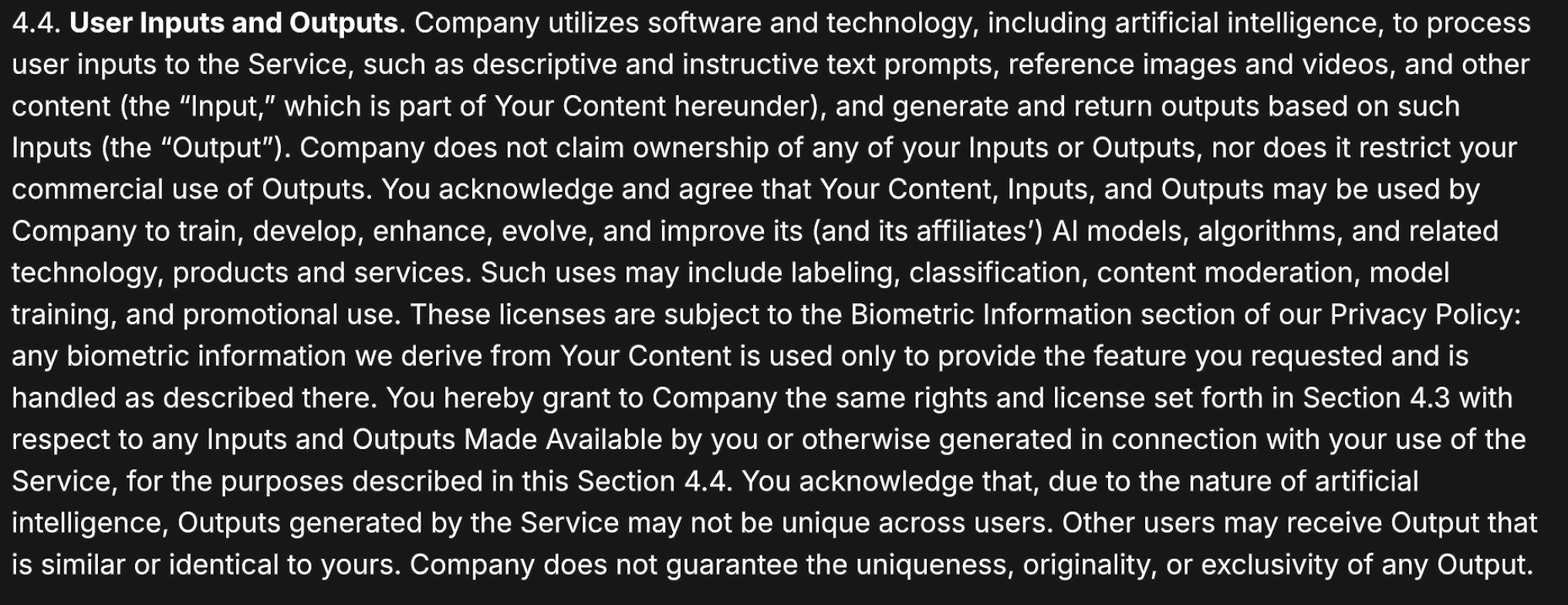
Could Higgsfield train AI models on user uploads and outputs?

This was one of the biggest IP alarms. The terms discussion claimed that prompts, reference images, uploaded media, and outputs could be used to train, develop, enhance, and improve Higgsfield’s AI models and related systems. For creators, that means your private creative process could become raw material.

Screenshot of a Higgsfield terms excerpt about user inputs and outputs.
03

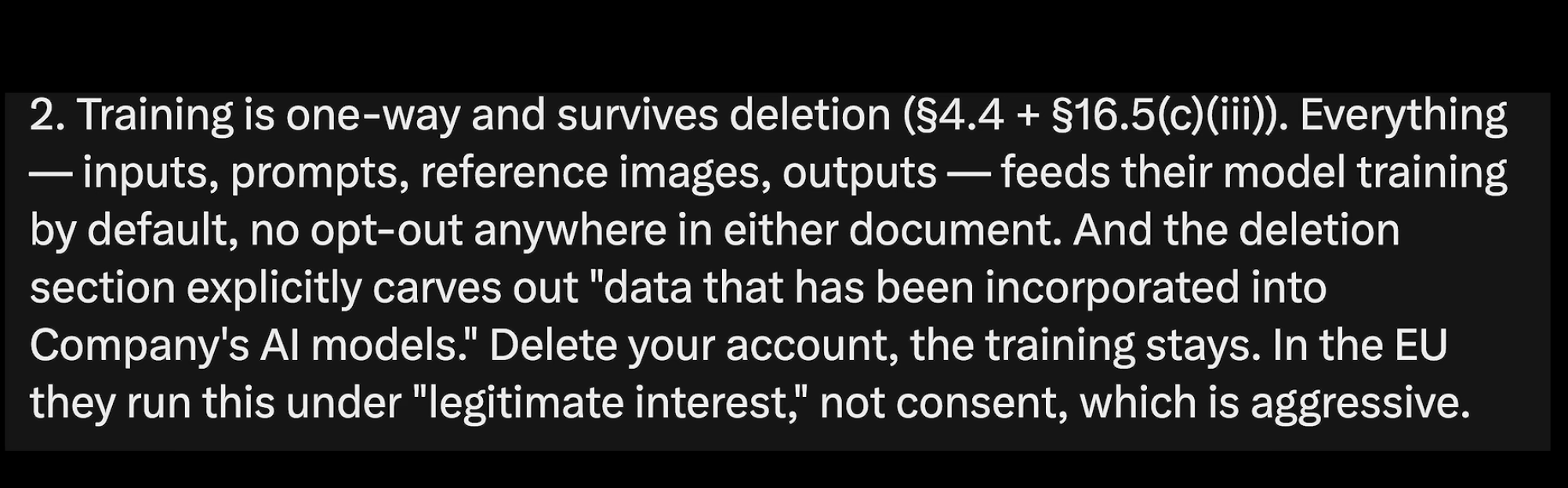
Does deleting your Higgsfield account fully remove your work from training?

The concern was that training use could survive deletion once data had already been incorporated into AI models. That makes deletion feel less like taking your work back and more like shutting the door after the copy has already been made.

Screenshot of a critique discussing deletion and model-training retention.
04

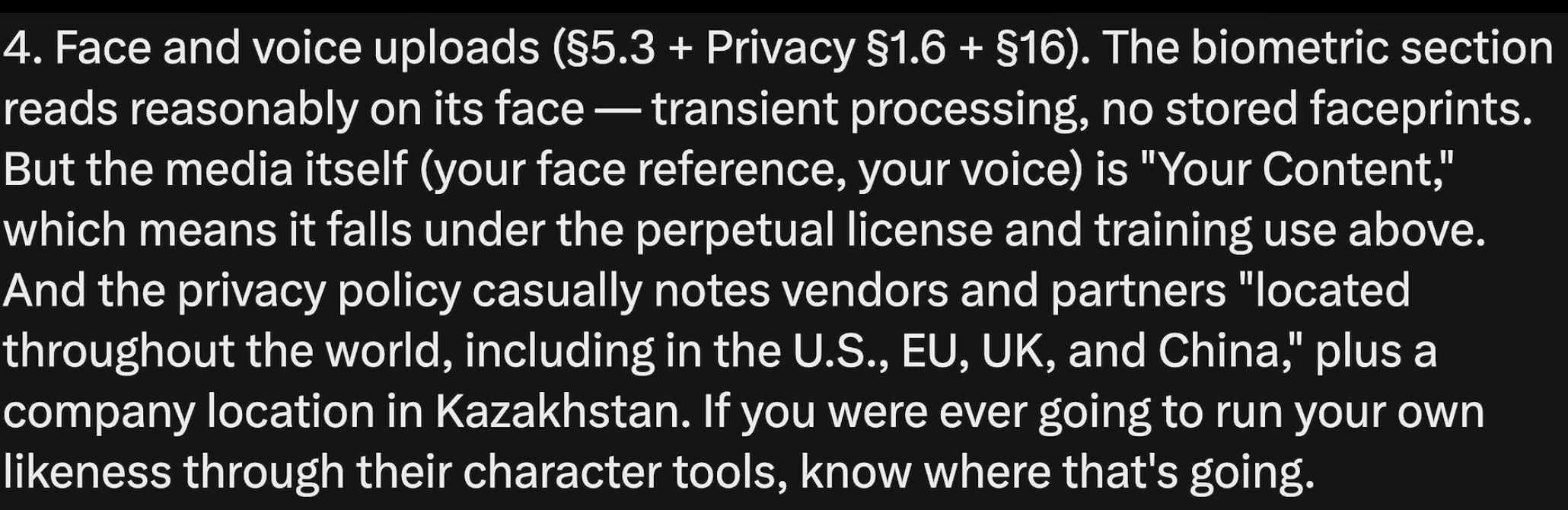
What was the concern around face and voice uploads?

The concern was that face references and voice uploads may be treated as “Your Content,” putting them inside the same broader license and training framework. Even if biometric processing itself is described as limited, creators still have to ask where their likeness media goes and who may process it.

Screenshot of a critique discussing face, voice, and biometric information.
05

Why does global data flow matter for creator IP?

If your work can move through vendors and partners across regions, you need to know exactly where it goes and under what protections. This matters even more for NDA work, unreleased brand campaigns, celebrity likenesses, product shoots, and confidential client references.

Screenshot of a critique discussing global vendors and partners.
06

What is the bottom-line IP warning for creators?

Do not upload anything to Higgsfield that you cannot afford to lose control over. That includes client assets, unreleased concepts, character references, faces, voices, confidential campaigns, proprietary style frames, or final commercial work. If ownership, training, deletion, likeness rights, and data-sharing rules are unclear, treat the upload button like a risk.

Editorial image of a locked client folder beside a red upload symbol.

Creator protection

Before you use, check the terms.

01

Screenshot pricing pages, credit balances, timers, and checkout screens before buying.

02

Keep every receipt, support message, Discord response, and failed-generation notice.

03

Use a credit card when possible so ordinary dispute protections remain available.

04

If you are a creator, require written payout terms before posting sponsored work.

Spread the word

Share the warning before someone pays.

Send the evidence hub to buyers, creators, teams, and editors who need a fast read on the public complaints.